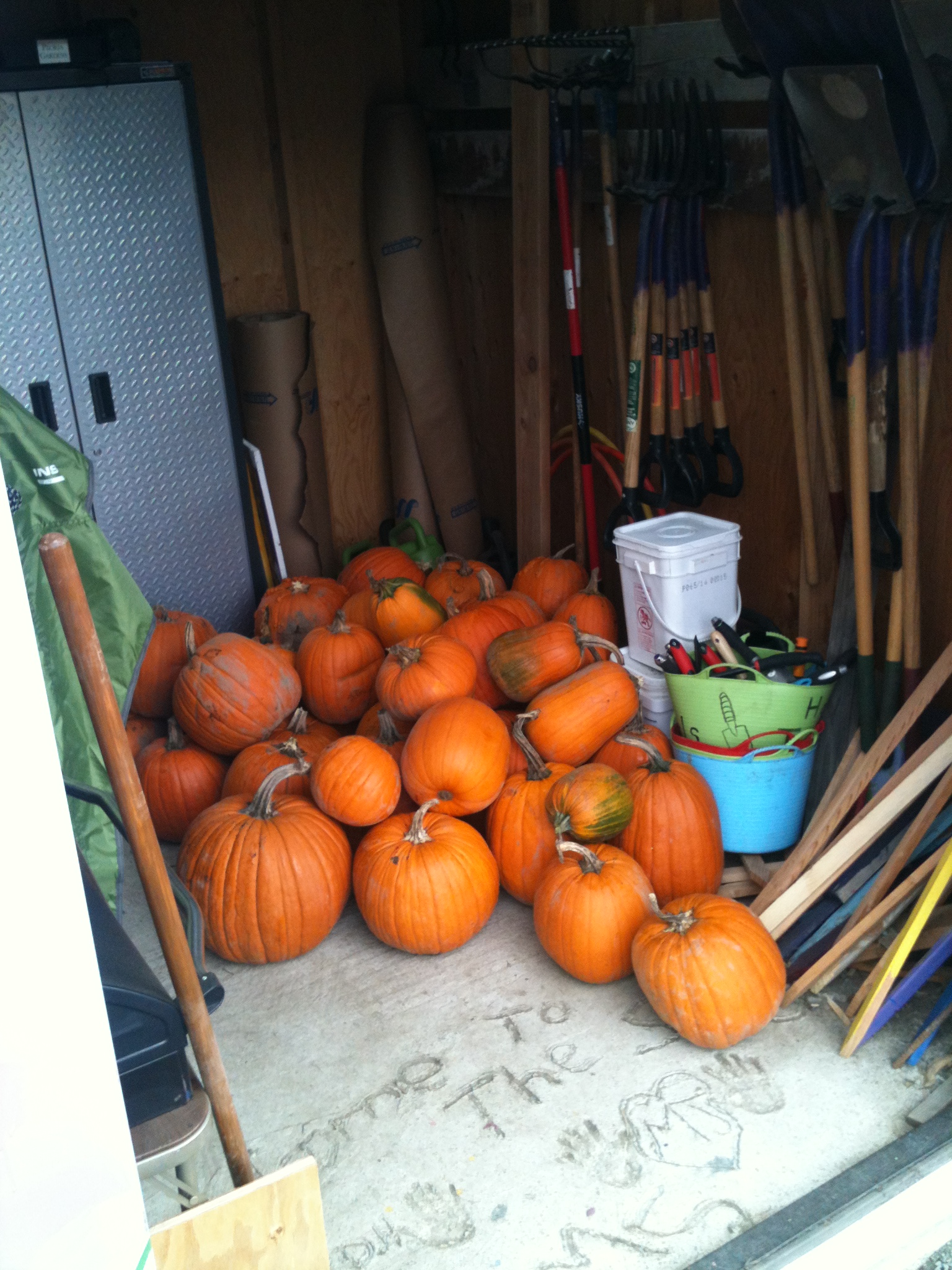
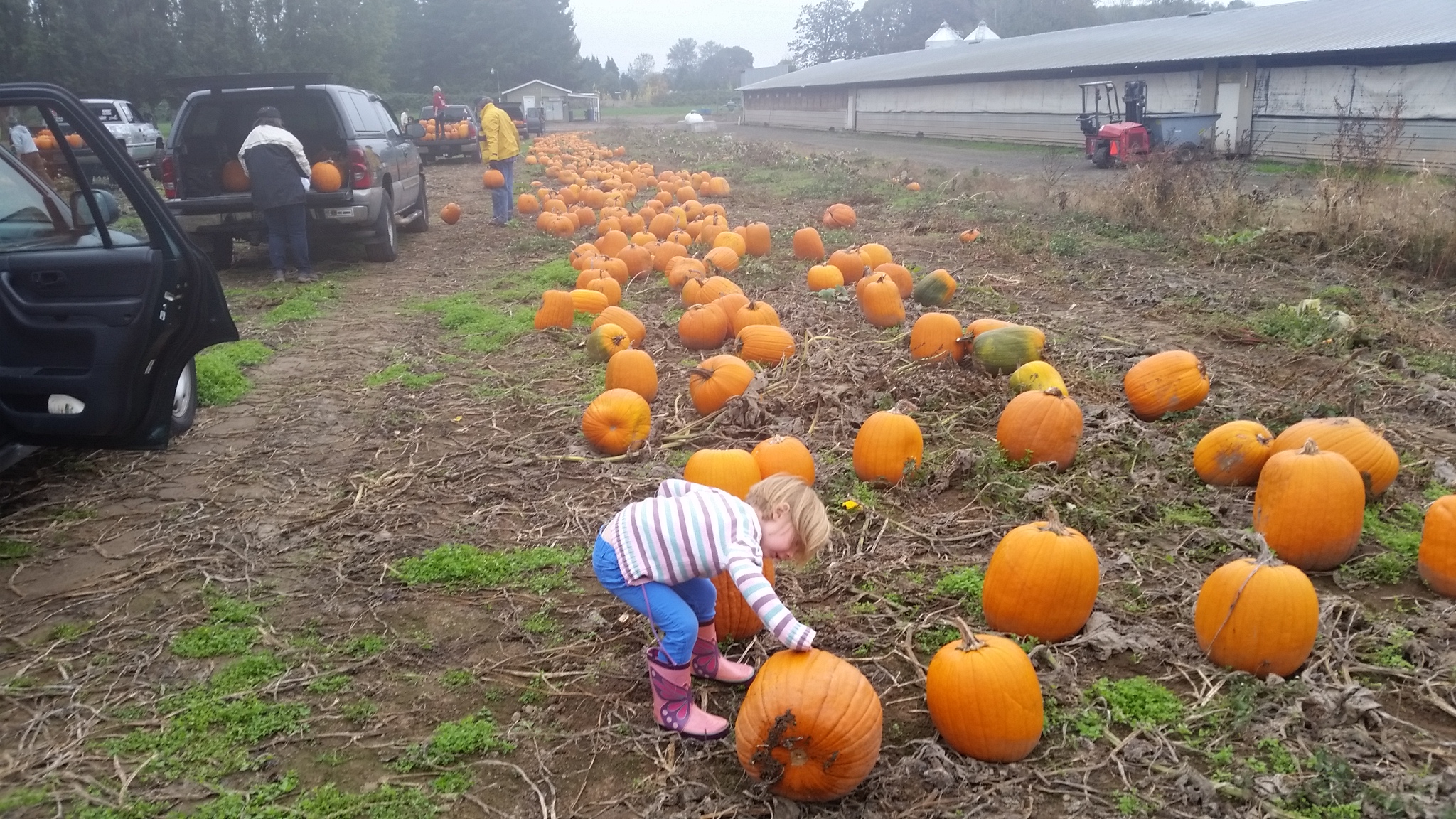
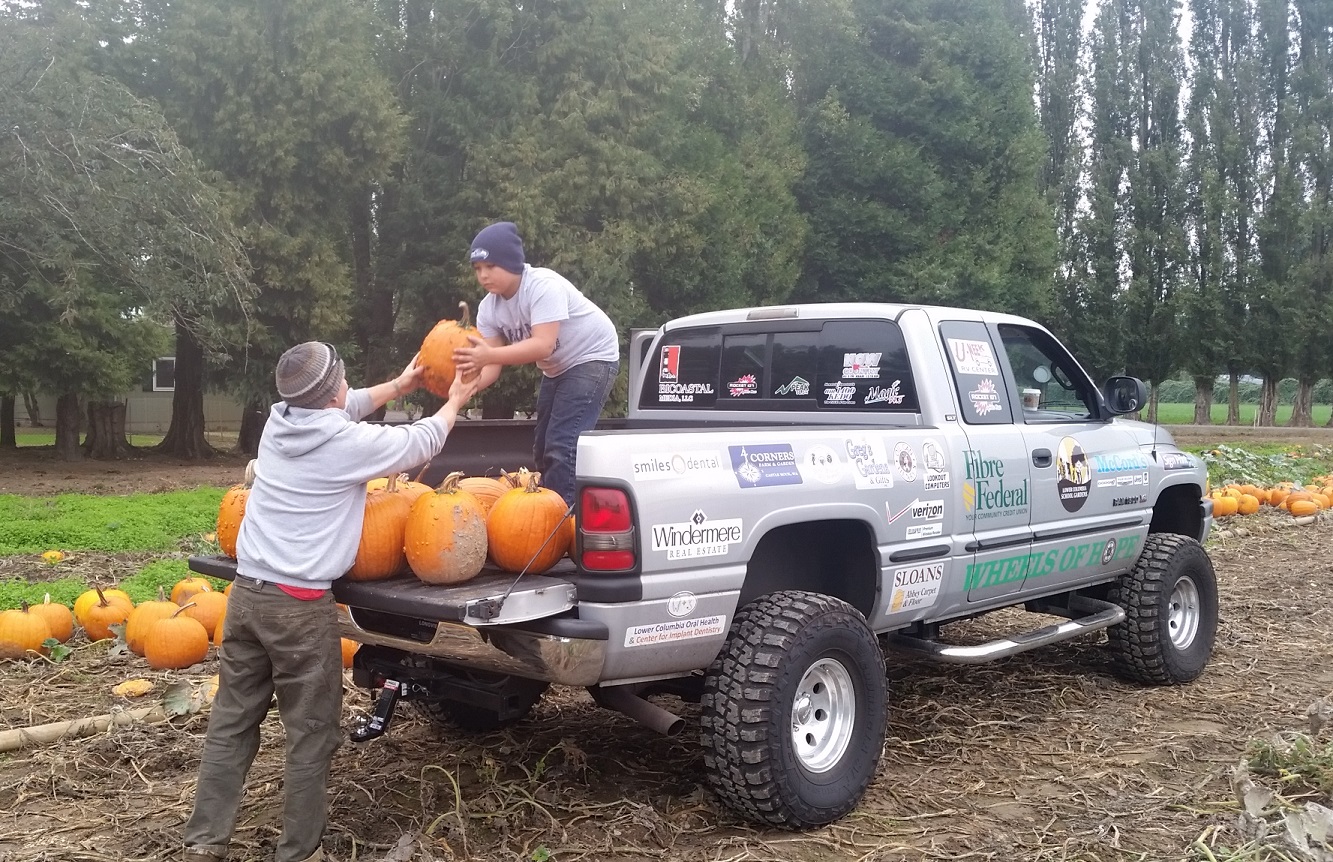
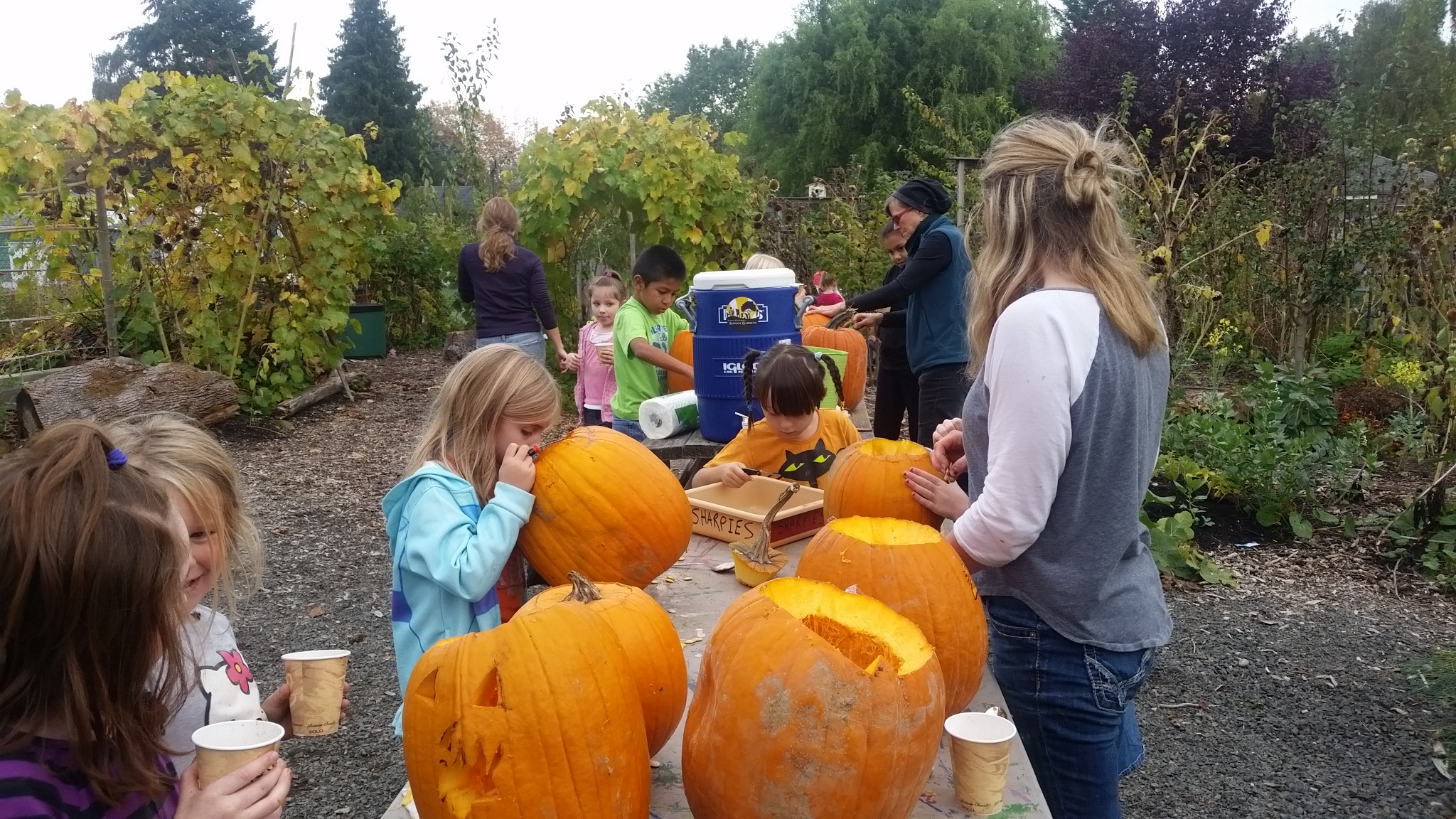
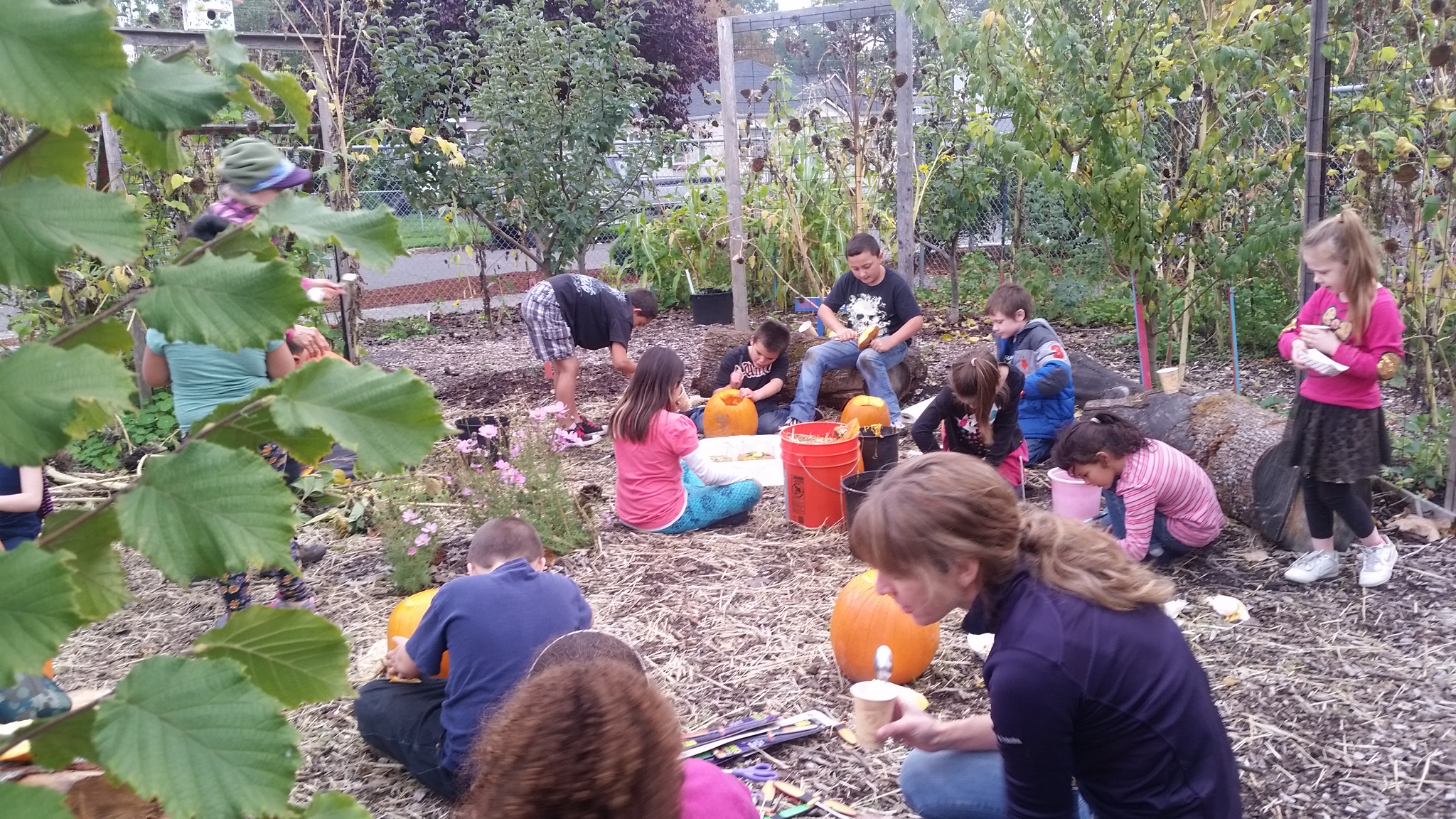
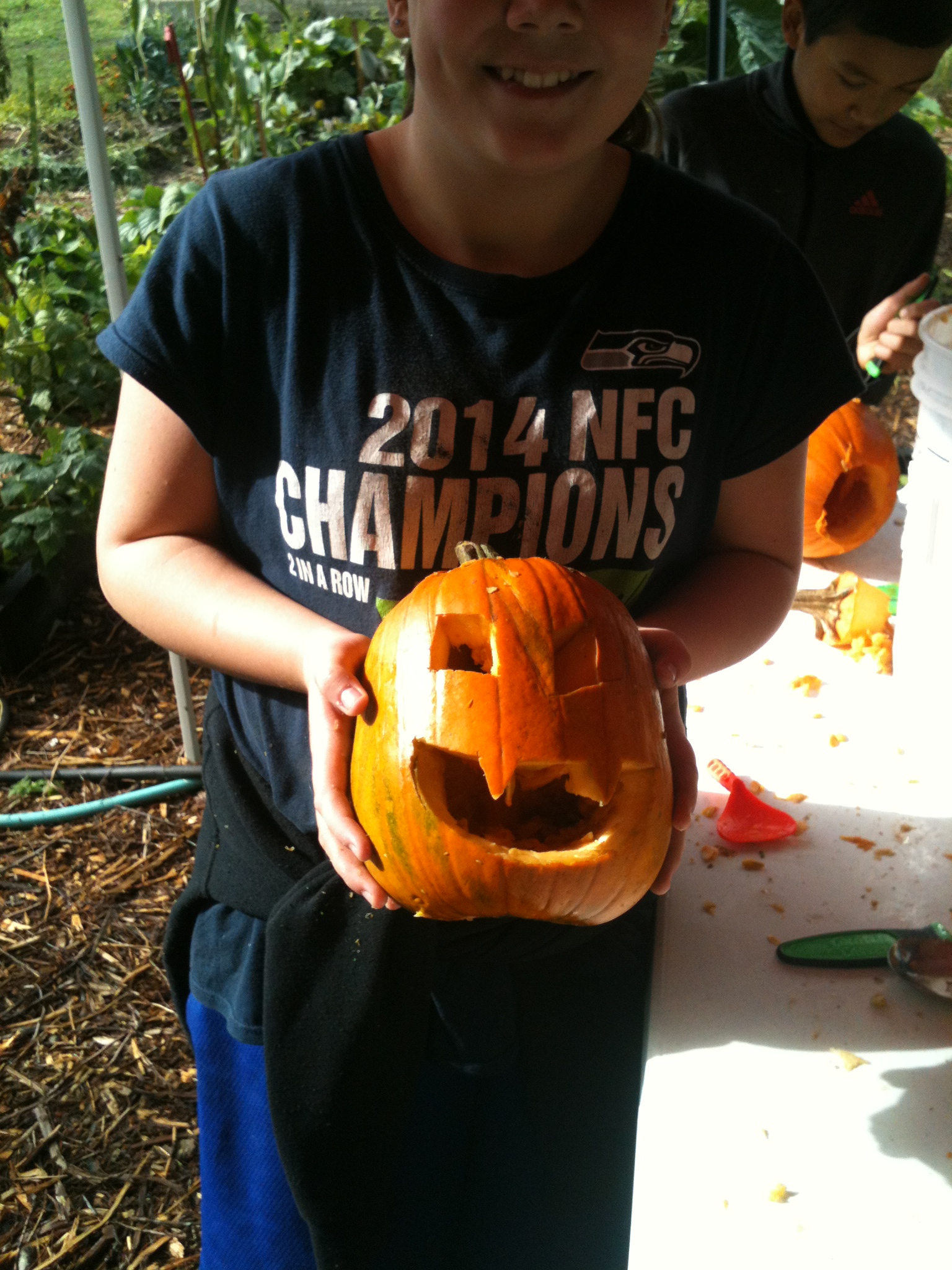
There were even-happier-than-usual kids in many Kelso and Longview School Gardens last week as After School Garden Clubs had the opportunity to carve locally-grown pumpkins. 700(!) pumpkins were donated by Woodland farmer Randy Behrendsen who was happy just to know they were going home with kids. Members of the LCSG board, LCSG staff and a slew of volunteers met in Woodland early on a Saturday to load pumpkins into trucks and deliver them back to school gardens in Longview and Kelso.
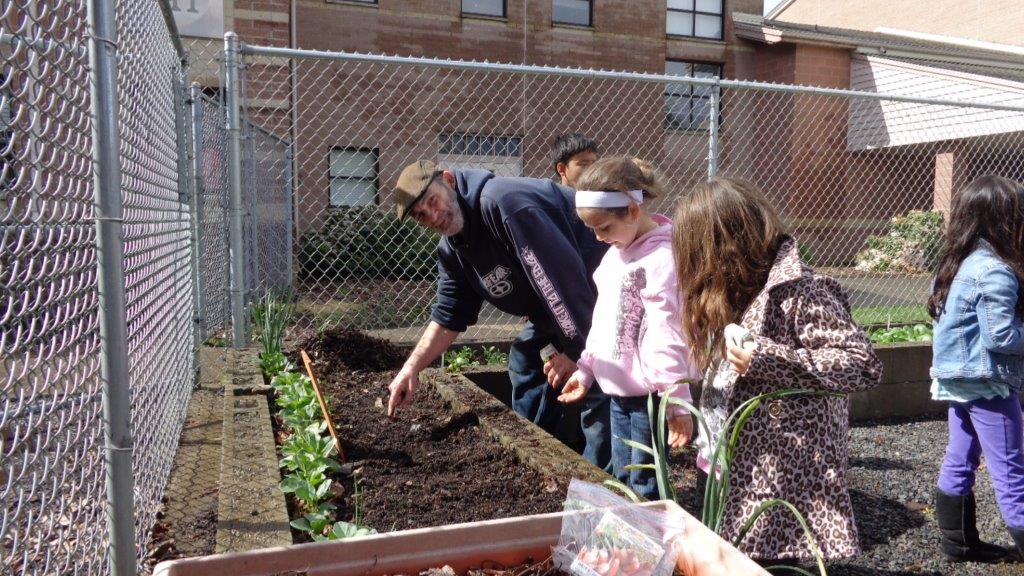
During the following week, kids in elementary and middle school gardens throughout the area got the chance to carve, decorate and take home their donated pumpkins. Students also enjoyed freshly roasted pumpkins seeds and made-from-scratch hot cocoa with their pumpkin carving.
Thanks to all who attended our Fall Fundraiser. If you couldn’t come this time, donations and contributions are always welcome. Please check out our donation page.
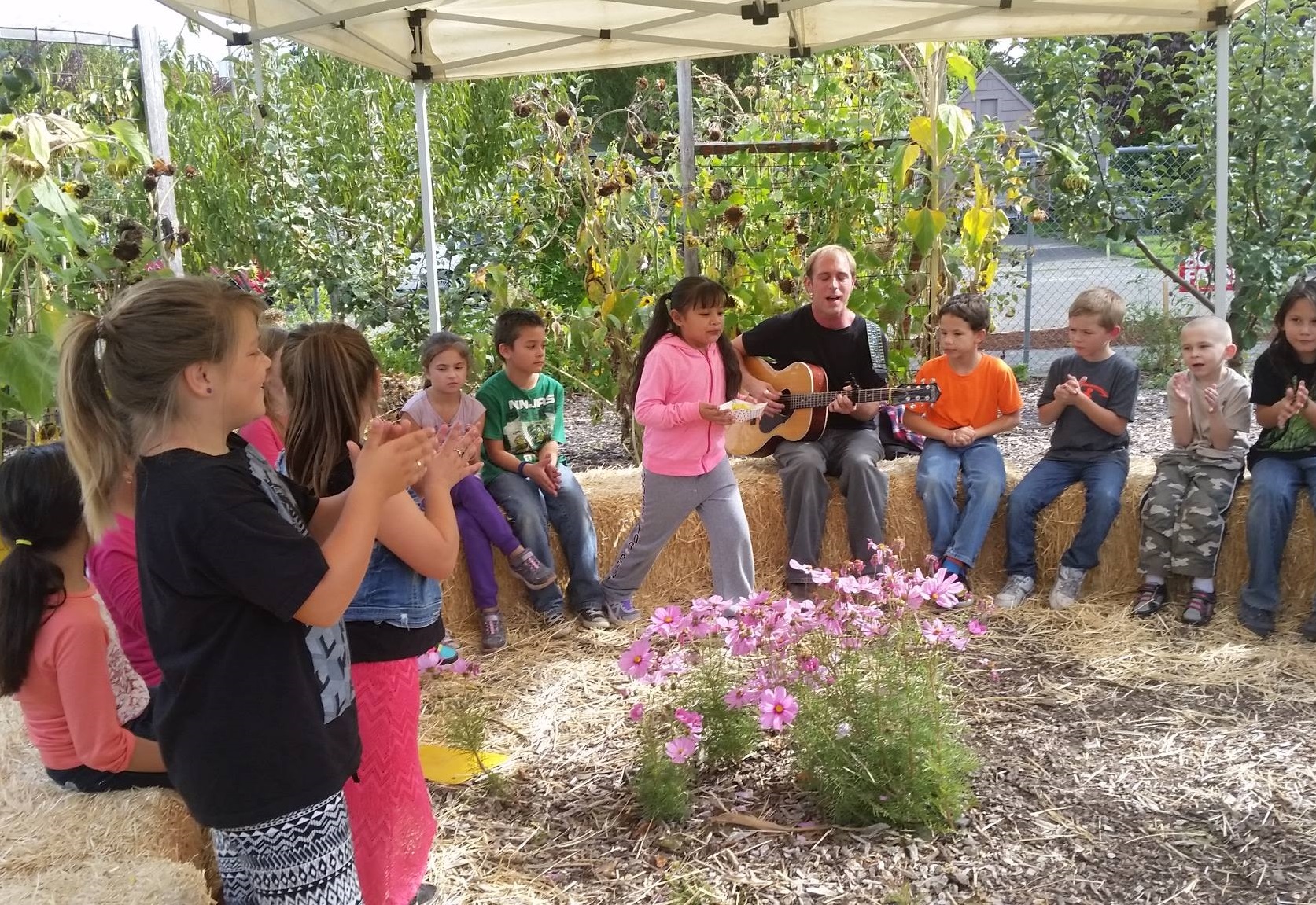
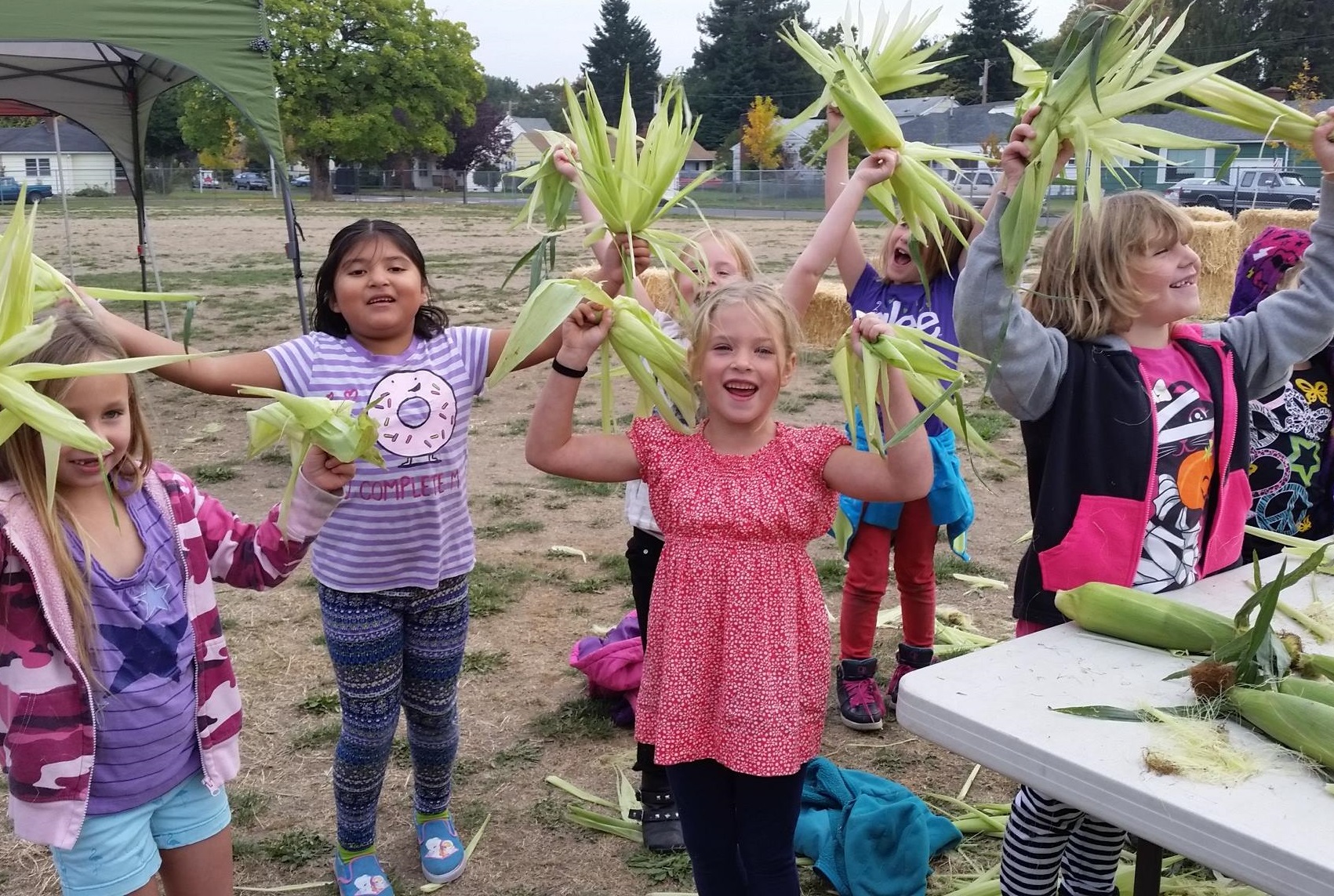
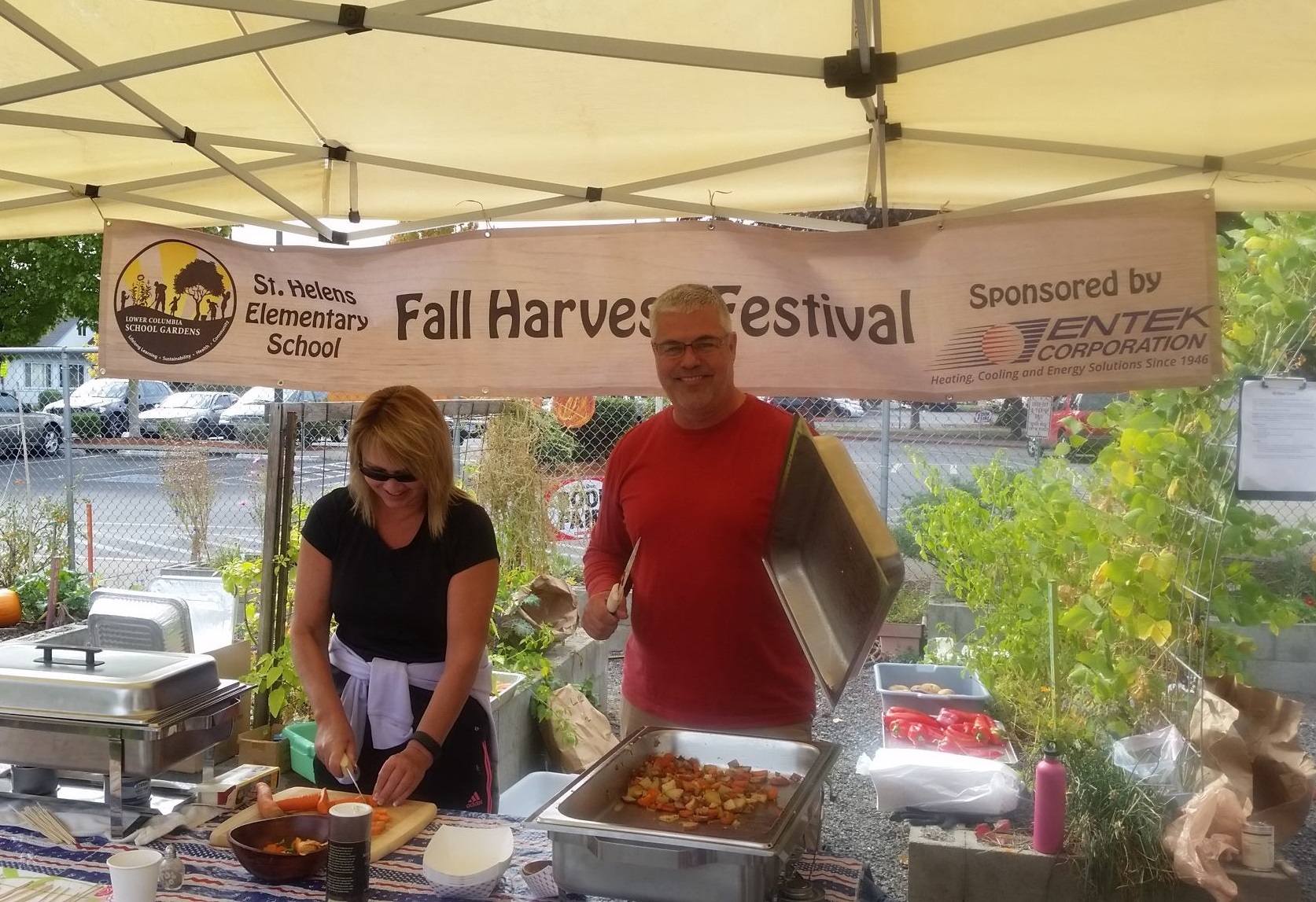
Every student at St. Helens had a blast on October 6 and learned a lot about real food at the same time. The Harvest Festival at St. Helens was generously sponsored by Entek. Many thanks to all our volunteers who worked so hard to make it a wonderful day for all.
Email info@lcschoolgardens.org to get in on similar events every year during the month of October.
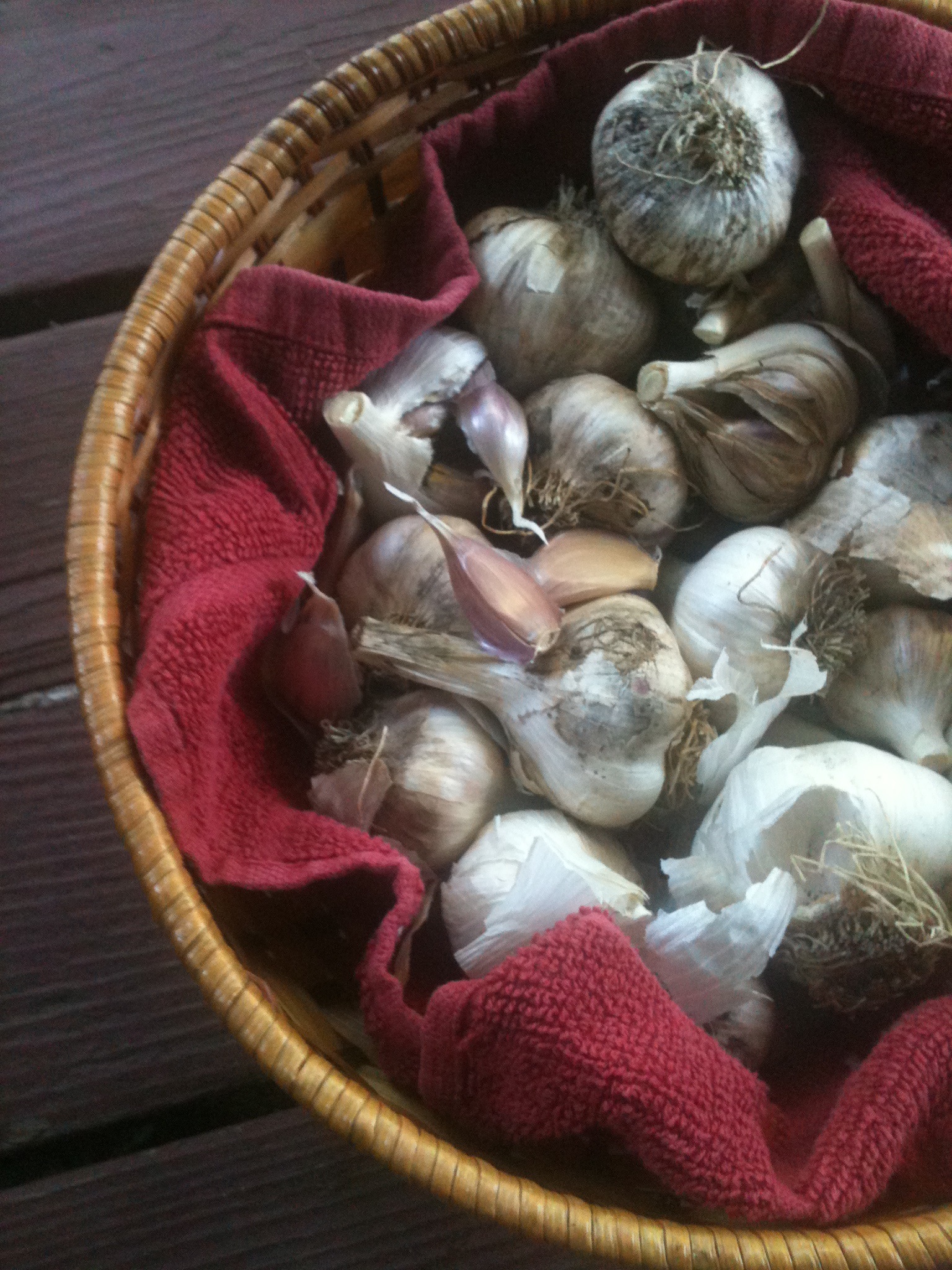
Big seed garlic cloves typically yield big plants and bulbs, and not surprisingly small cloves yield small plants and bulbs
Garlic is easy to growGarlic is a simple and wonderful thing to grow in your own garden. The bulbs and cloves are a welcome and healthful ingredient in many dishes.
Softneck vs. hardneck garlicSoftneck garlic is what you’ll typically find in grocery stores, mainly because it can be stored for such a long time without sprouting. Softneck is also great for making garlic braids and has a relatively mild, simple flavor. Hardneck varieties of garlic are closer to wild garlic, with complex flavors. The skins or wrappers of many of these varieties tend to slip off smoothly, so they’re sometimes preferred for using in the kitchen. If you plant hardneck garlic you’ll also get to enjoy a garlic scape harvest. Most hardneck varieties will store for 6 – 10 months.
Amend soil in mid to late-Sept and plant any time during Oct in loose, rich soil In our corner of the country (the Pacific NW), garlic is usually planted during the month of October, hopefully giving the cloves enough time to grow some early roots before the ground freezes. This member of the Allium family appreciates soil that has been amended a few weeks in advance with a well-balanced organic fertilizer or compost. Plan to do the soil amending in mid to late September and then once your garlic has been planted it is best to cover over the soil with mulch – either straw or leaves.
Plant cloves 5 – 9 inches apart• Choose the biggest cloves for planting and save the smallest for cookingPlant each clove 5 – 9 inches apart, no matter how you lay out your rows or beds. Break bulbs apart into separate cloves just prior to planting and plant the root end down (usually this means the pointy side goes up), about two inches deep. Stick to planting only the larger cloves since smaller cloves will yield smaller bulbs, and use the smaller cloves for eating right away.
During Spring: Fertilize once and water regularlyIn the Spring when garlic plants are experiencing most of their vegetative growth, water regularly like any garden green (when it’s not raining, that is). Organic Nitrogen fertilizer should be applied at this stage of growth. When days become longer and the temperature starts to climb – typically in May – garlic is finished growing its green leaves and will begin to send energy downward to its bulb.
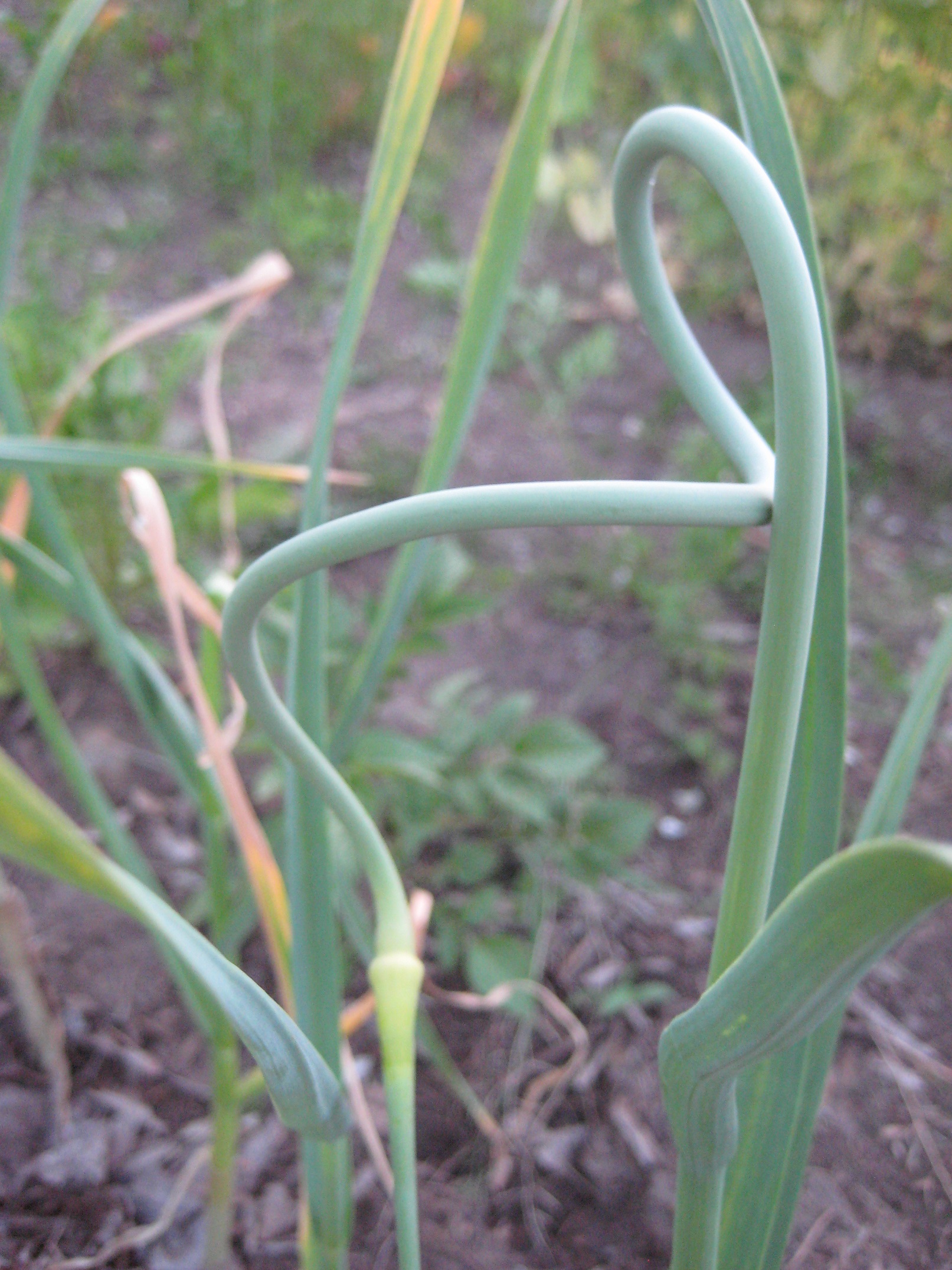
Hardneck garlic varieties provide delicious Scapes in May/June before the main crop in July
Cut garlic Scapes from hardneck garlic in May/JuneHardneck varieties send up a flower stalk (AKA garlic scape, garlic curl, garlic bracelet, garlic spear) around May or June. Before the stalk begins to turn woody, uncoil, and stand up straight, the stalk should be harvested/cut from the plant about ½ inch above the top plant leaf. This helps direct the plant’s energy toward the bulb.
Harvest garlic crop in June/July when all but top four leaves have turned brownAs harvest-time nears, the plants begin to dry and turn yellow/brown from the lowest leaf up and from the leaf tips downward, one at a time. Harvest when top four leaves are still mostly green. A spade, garden fork, or shovel is best for harvesting garlic but be careful to insert the tool far enough away from the plant that you don’t damage the garlic bulb.
Cure garlic for 3 – 4 weeks out of direct sunlight with plenty of air circulationPlants should be bundled in groups of 5 – 10 plants and hung inside out of directly sunlight with good air circulation. If fresh bulbs are left in direct sunlight for more than a few minutes they can actually sunburn or cook right in their skin! Bulbs are completely cured in three to four weeks in dry climates but fans may be necessary in other situations.
Store garlic in cool, dark location to prevent sprouting (do not store in fridge)Store your garlic as whole bulbs in a cool and dark place such as a basement or heated garage. Never store garlic in the fridge because it will sprout very quickly. Most garlic stores well at room temperature. Once planting season comes around again, start the same process over, using only the big cloves for planting and the rest for cooking.
Information adapted from Filaree Garlic Farm’s website.
For more information and details on garlic varieties, visit www.filareefarm.com
“Ultimately, it is volunteers who make it possible for kids to experience the school garden in a meaningful way.”
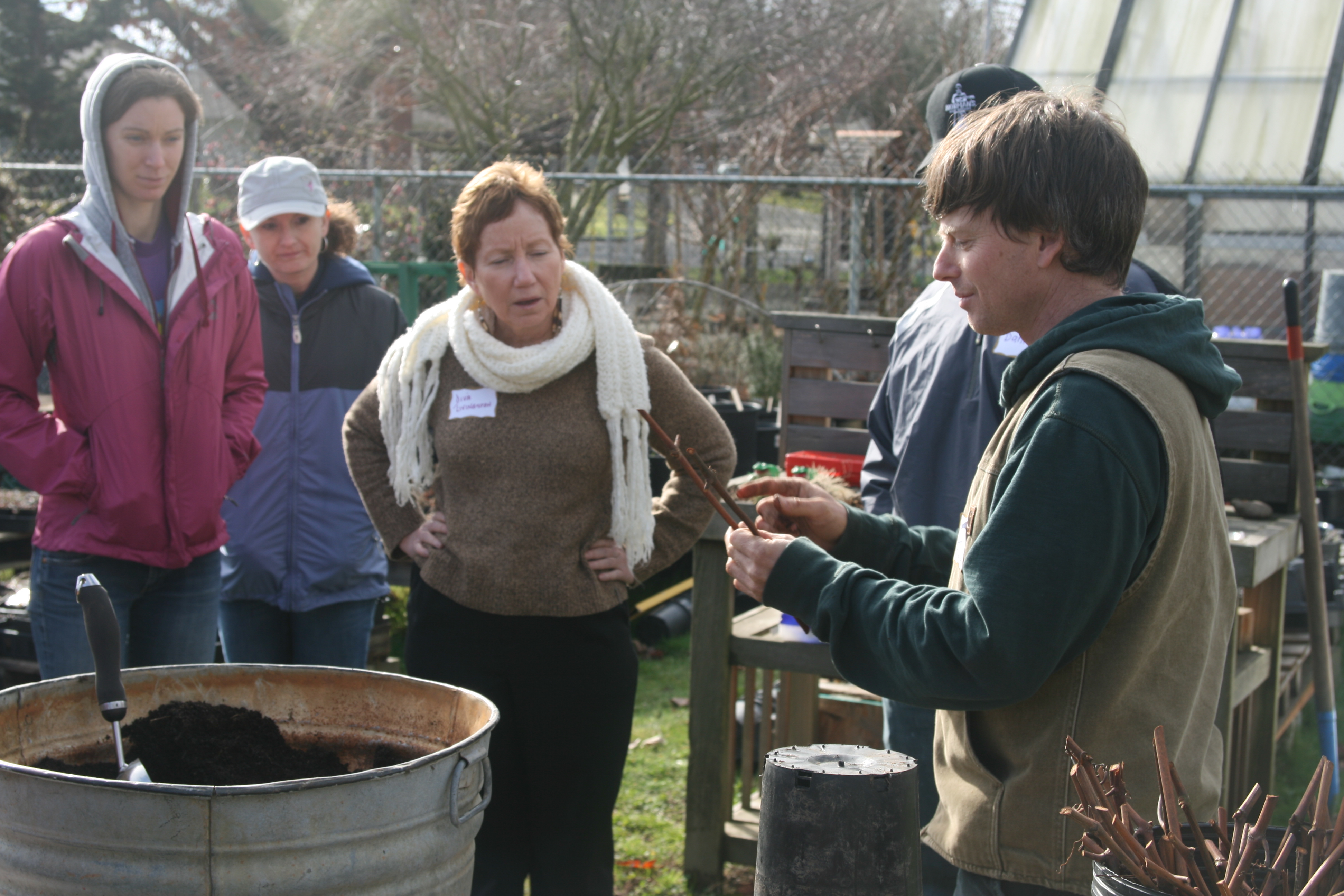
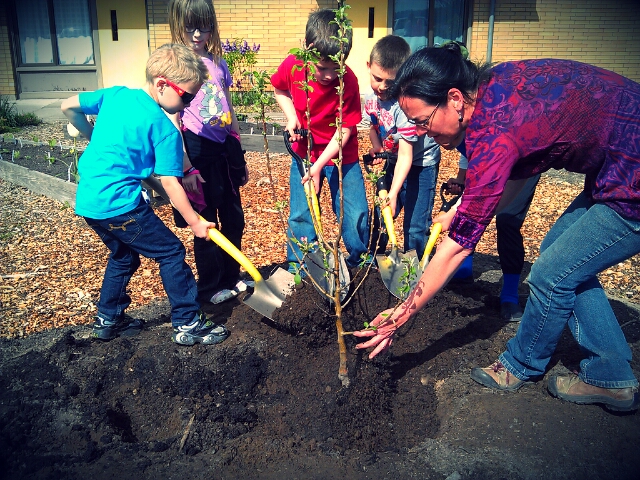
Whether you are currently volunteering in a school garden or just starting to think about getting your hands dirty… this free training event is for you! Learn simple, effective techniques and strategies for helping kids (and plants!) thrive.
We hope you can attend one of these two (identical) sessions:
Friday September 11, 9:00-noon
Saturday September 12, 9:00-noon
Location:
Northlake Elementary
“Garden Lab” Room 26 (2nd portable)
2210 Olympia Way
Longview, WA 98632
We will work in the classroom as well as out in the garden – there will be plenty of hands-on learning!
Topics include:
Why school gardens?
Garden activities and lessons
Starting seeds indoors and outside
Composting with kids
Cooking with kids
Garden safety
Group management strategies
Inquiry Based Learning
School Garden Resources
The Garden Coordinator
And more!
Enjoy learning and connecting with great people who have a shared passion for kids, gardens and good food. Snacks provided. Meet new garden rabbits Sam and Sorrel.
This training is free! All are welcome, even those outside Cowlitz County.
Willapa Hills Audubon supported local school gardens in an important way in the 2014-2015 year – they sponsored a garden AmeriCorps position for $5,000! This allowed Lower Columbia School Gardens to increase our reach significantly, and connect hundreds more kids and families with real food and hands-on learning in school gardens.
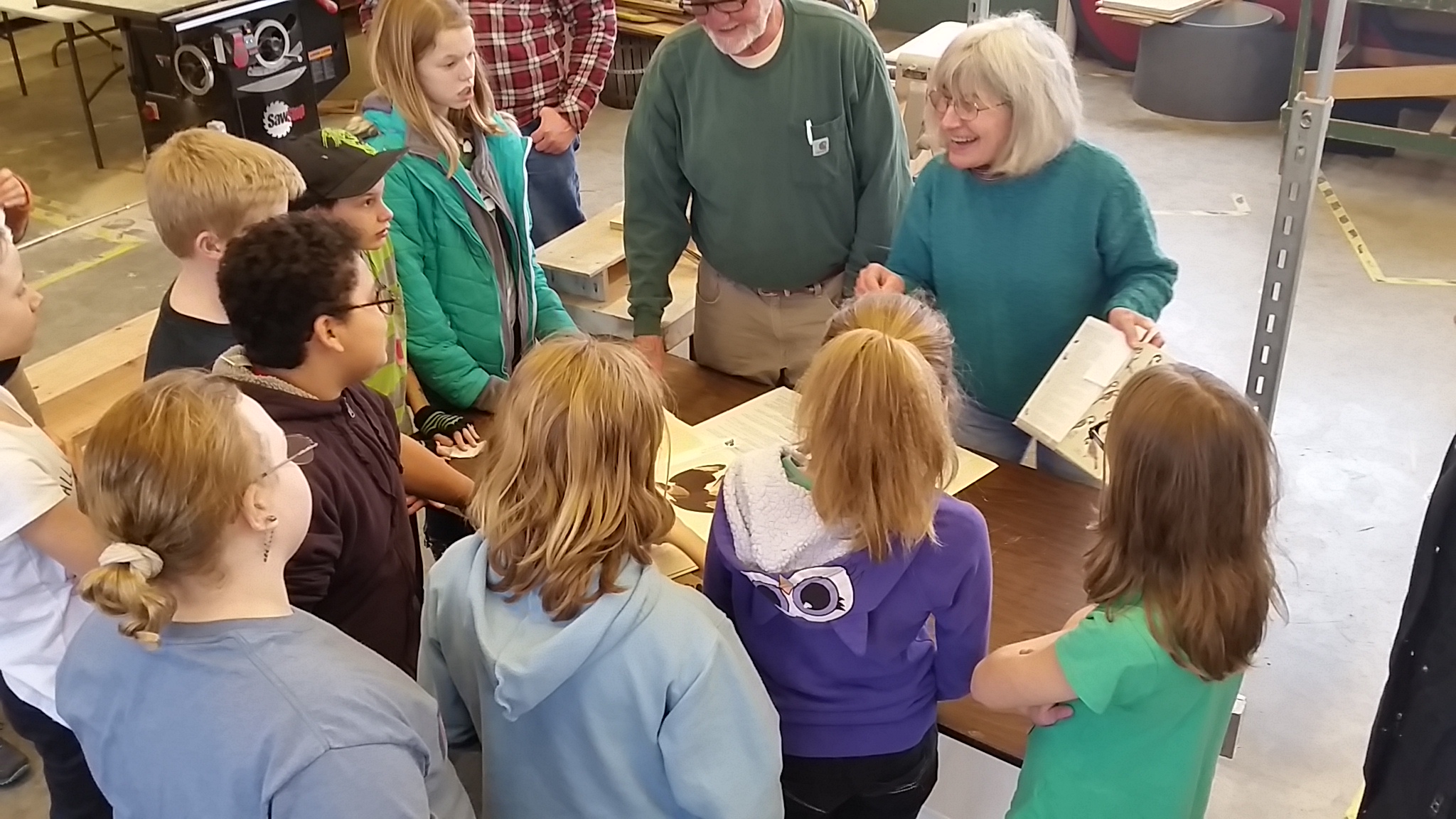
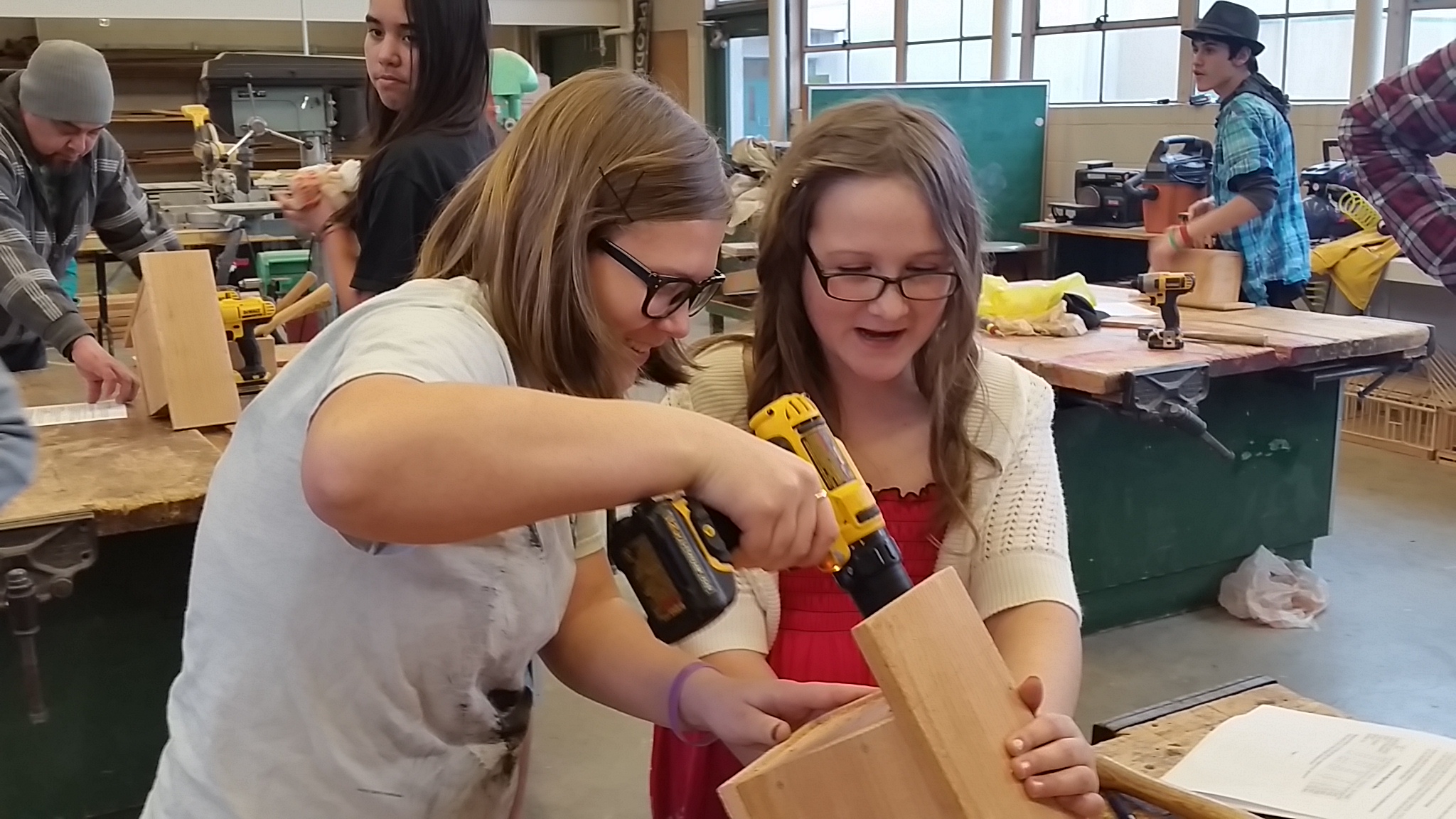
Willapa Hills also partnered with Lower Columbia School Gardens on a bird-box building event in January, when 28 Monticello Middle School students learned about birds and habitat, then assembled a cedar bird box to take home. We see these kids as future advocates for a greener world because of these experiences – thank you Audubon!
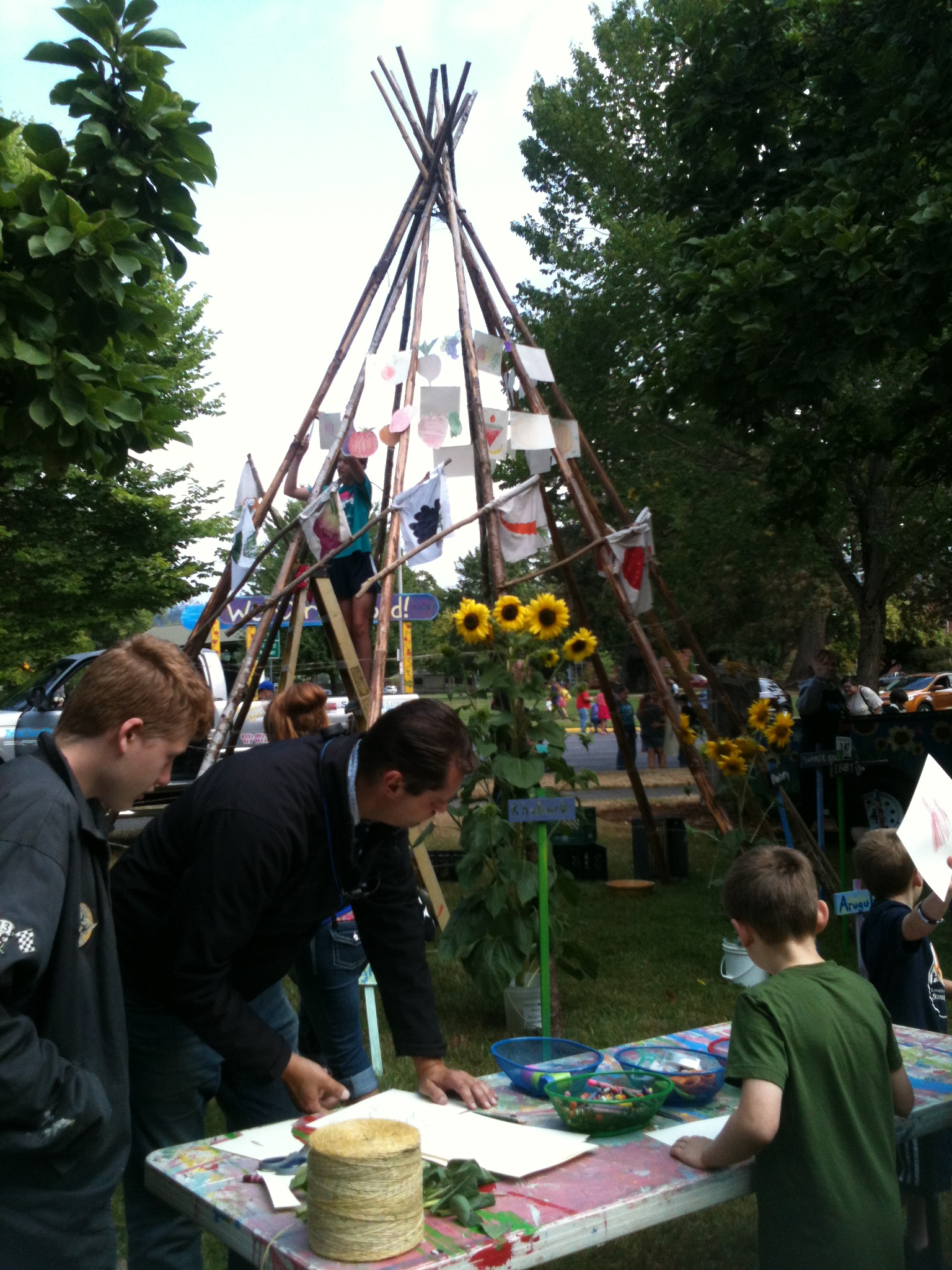
Kids of all ages enjoyed decorating the garden wigwam with hand-drawn fruits and vegetables.
August usually means a break from classes for students, but it’s the time of year when School Gardens are in full swing with summer programs. Summer also provides many opportunities for us to participate in community events around our area and Squirrel Fest is one Longview event not to be missed. All proceeds from Squirrel Fest this year went to Cowlitz County Habitat for Humanity.
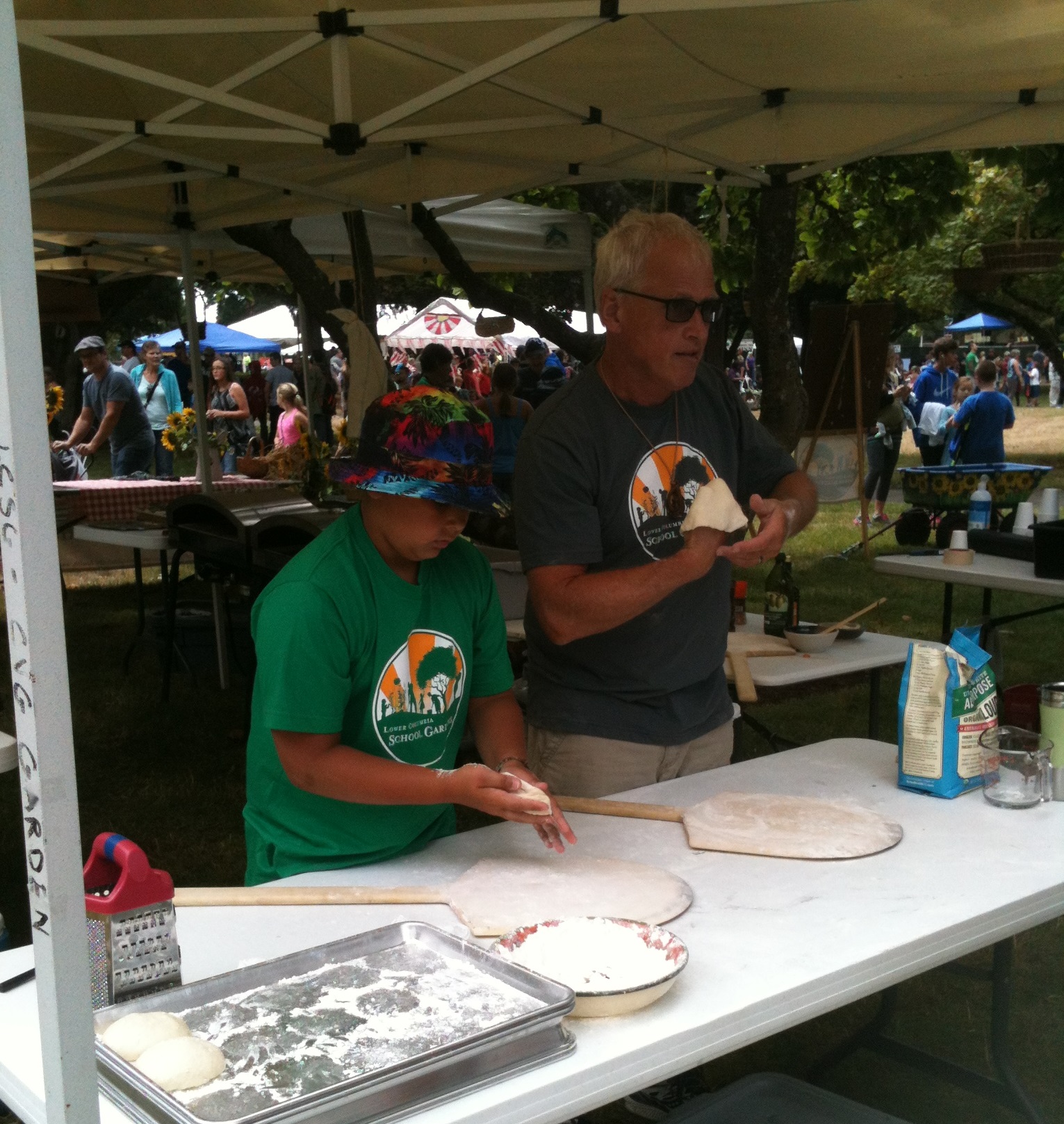
Students and school garden volunteers shape the dough for garden pizzas.
School Gardens had a fun set-up in the Kids’ Area at the event this year that included:
– Handing out free garden seeds
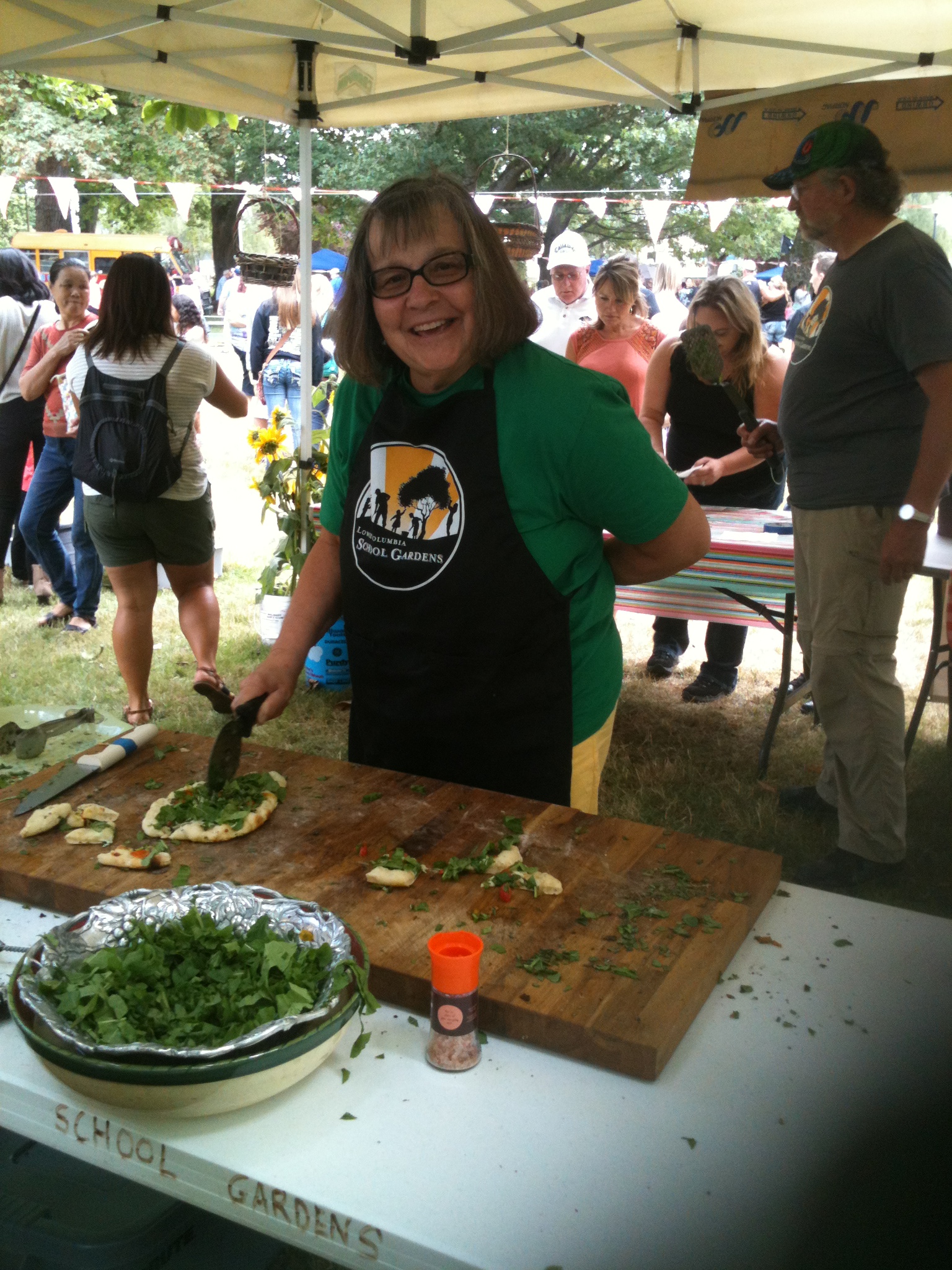
– Offering samples of right-out-of-the-oven delicious garden pizza
– Giving visitors a chance to decorate a garden wigwam with hand-drawn pictures of fruits and vegetables
Pizzas were topped with fresh garden ingredients and made by students and volunteers on-site.
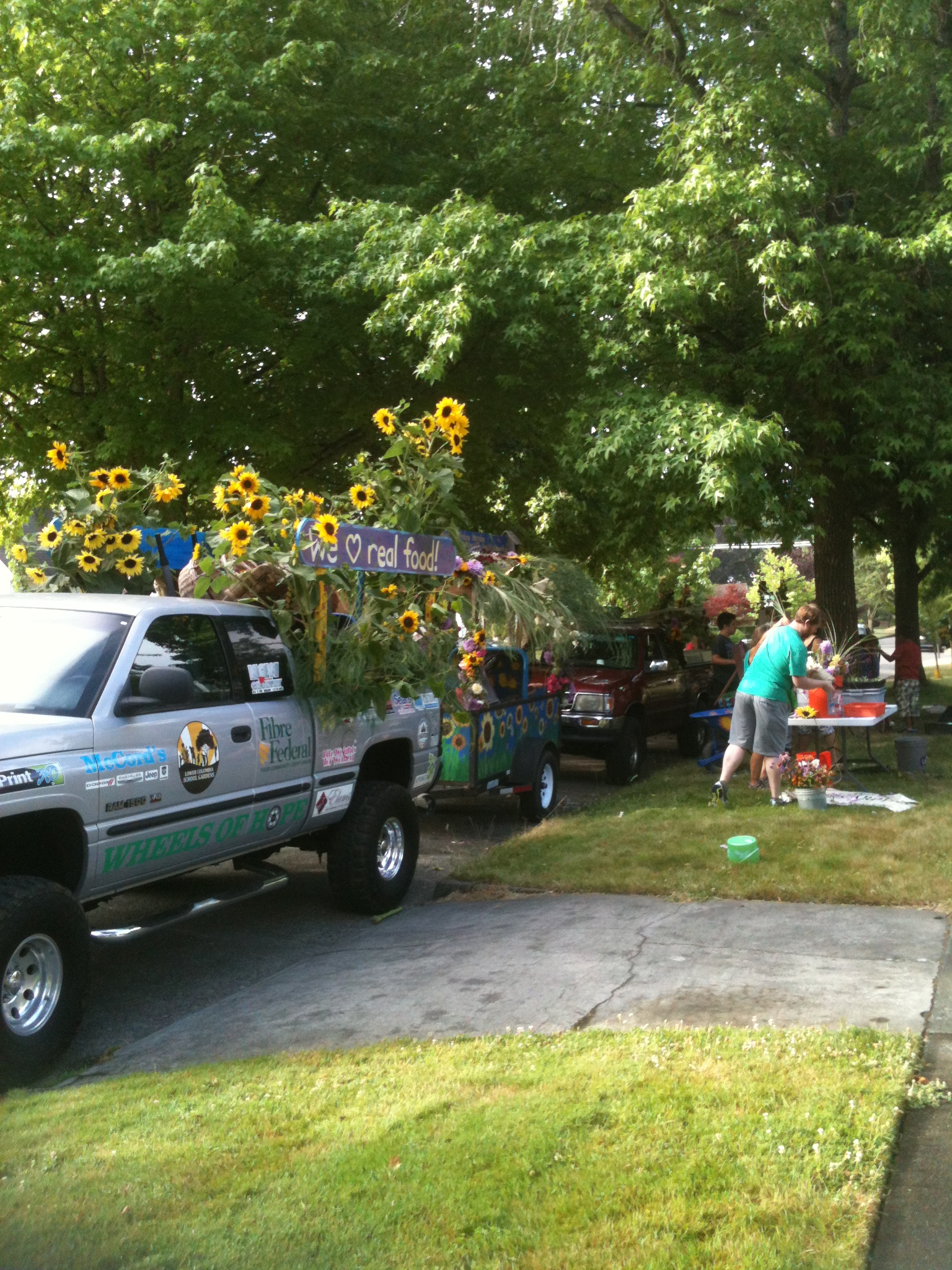
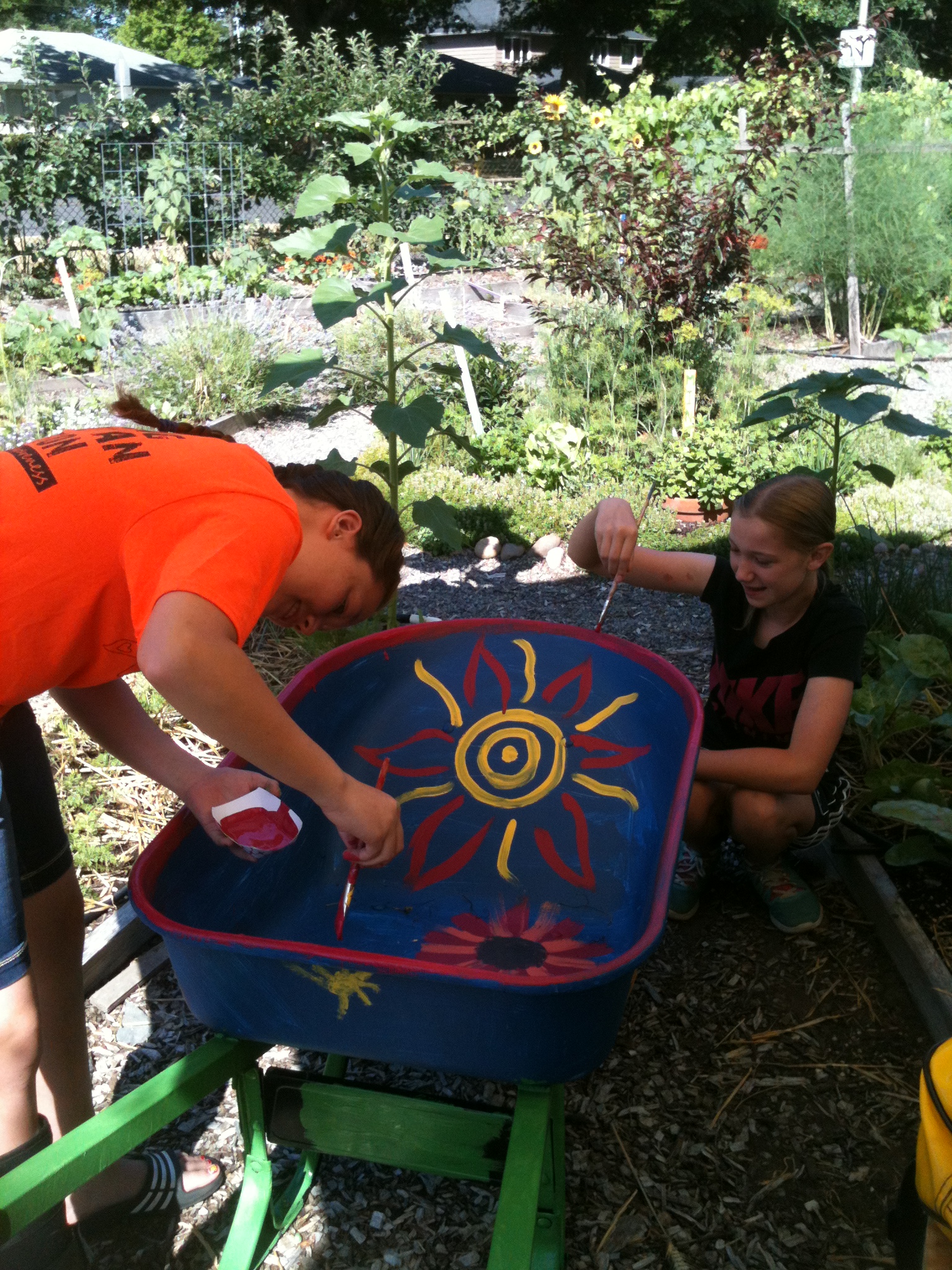
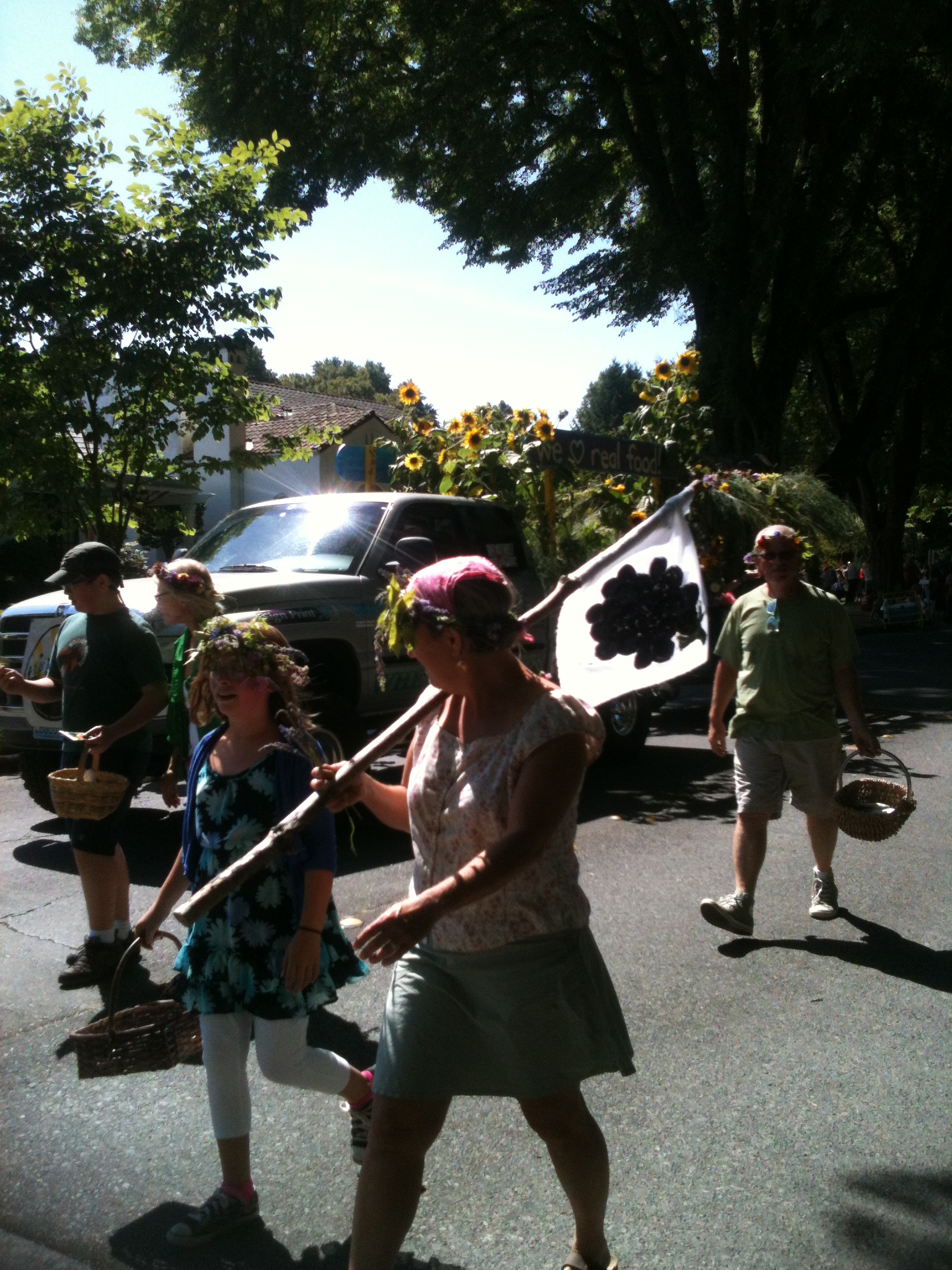
More than 40 kids and adults gathered early on the 4th of July to decorate the Garden trailers with colorful flowers, herbs and grasses picked fresh shortly beforehand. Once everyone arrived at their place in the parade line, more fresh flowers were used to assemble flower crowns for each person. Everyone looked like a sweet garden fairy! It was a lovely day marching together beneath the tall, shade-giving trees of Longview as the community gathered to celebrate. Seed packets were handed out (in lieu of candy) by students riding in brightly painted wheelbarrows, holding signs and flags that boldly declared “Eat Real Food”. You can be sure that the School Gardens had the most colorful float that day.